
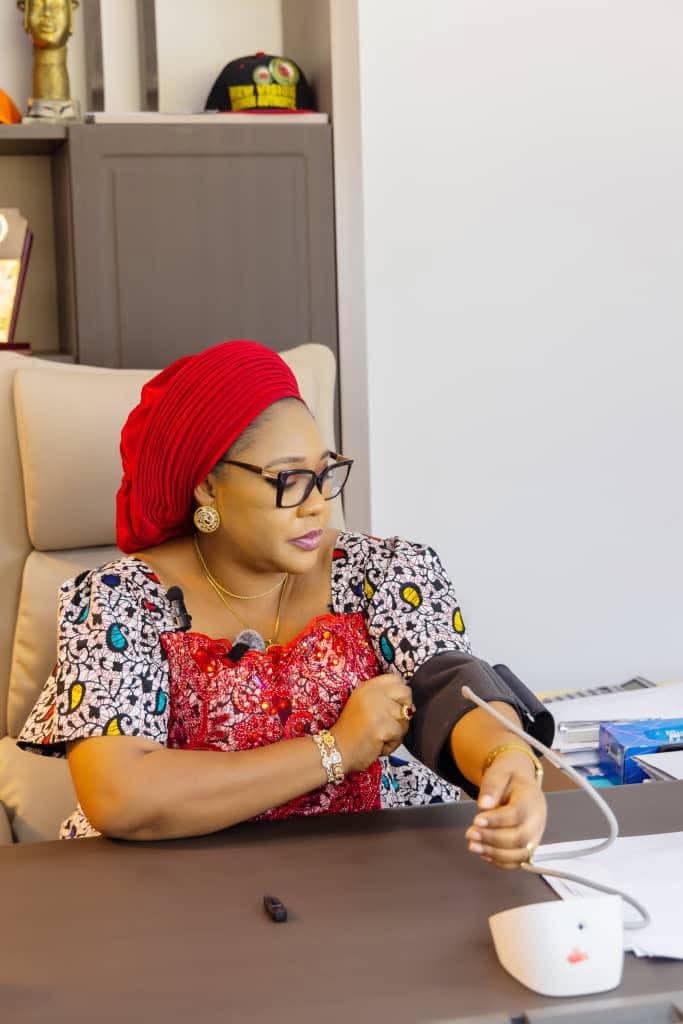
The Coordinator, Office of the Edo State First Lady, Mrs. Edesili Okpebholo Anani, has emphasized the need for healthcare facilities in Edo State to prioritise the use of reliable and calibrated blood pressure measurement tools to ensure accurate readings.
Speaking as part of activities to mark World Hypertension Day, she said increased enlightenment and action are necessary to combat the growing burden of hypertension.
“Hypertension is a growing burden in our society that affects millions of people worldwide, often without symptoms; making regular blood pressure checks crucial for detection and management,” she said.
Emphasizing the importance of accurate blood pressure measurement in the diagnosis and management of hypertension, Mrs. Anani advised: “As an individual, ensure you do your blood pressure checks regularly so as to be able to detect early enough, if you are hypertensive.
High blood pressure is dangerous and often a silent killer but you can take control by knowing your numbers. Here is how to check your blood pressure right: get your blood measurement tool, use a comfortable chair, sit back, feet flat, rest for five minutes. Stay still, press start. Remember, don’t talk while taking your blood pressure.”
Mrs. Anani highlighted the critical role of the Government in preventing and managing health challenges through institutions like the Ministry of Health, the Edo State Health Insurance Commission, and Primary Healthcare Centres.
She reiterated the State Government’s commitment to promoting health initiatives that benefit the people of Edo State, particularly women and girls, who are often disproportionately affected by hypertension.
She also called on individuals, families, and communities to take ownership of their health by adopting healthy lifestyles: “I’m calling on all stakeholders to prioritise hypertension awareness and control. By adopting healthy lifestyles, ensuring accurate blood pressure measurement, and promoting public health initiatives, we can reduce the impact of hypertension on our communities and improve overall health outcomes.”
